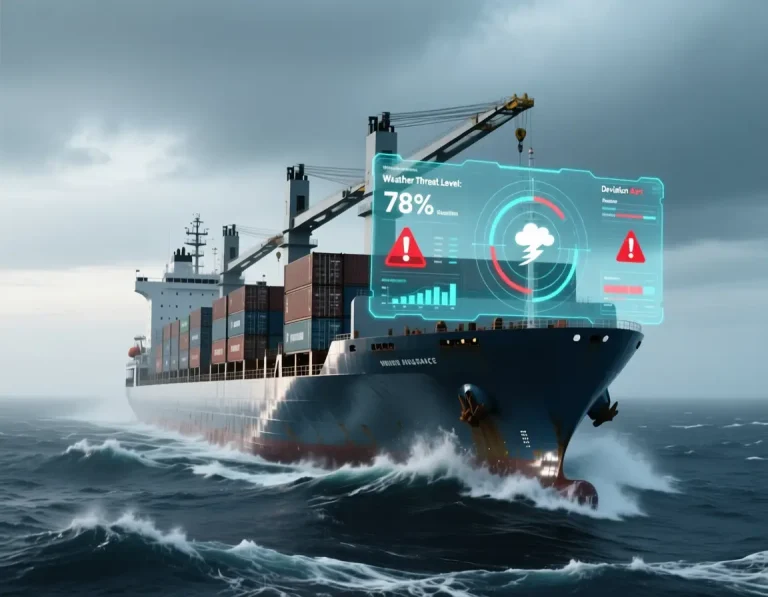
When working in maritime transport, one term you’ll often come across is P&I. But what exactly is the P&I meaning in a practical, day-to-day sense? This article provides a fresh and in-depth perspective on Protection and Indemnity insurance, a specialized branch of marine liability insurance that protects shipowners from third-party claims and operational risks.
Prefer listening?
If you’d rather listen than read, we’ve prepared a full audio version of this topic:
Let’s explore what this insurance really covers, how it works, and why understanding the P&I meaning is essential for anyone involved in global shipping.
Breaking Down the P&I Meaning
P&I stands for Protection and Indemnity. Unlike traditional policies that cover only physical damages (like hull or machinery), P&I addresses the liabilities a shipowner or operator may face during maritime operations. It focuses on financial responsibility for others’ losses rather than damage to one’s own assets.
The P&I meaning goes far beyond a simple acronym—it’s a legal and financial buffer in the high-stakes world of marine commerce.
Why Protection and Indemnity Insurance Exists

To fully understand the P&I meaning, it’s important to recognize why this form of coverage was created in the first place. During the 19th century, marine insurers often excluded third-party risks from their policies. This led shipowners to form mutual clubs—what we now know as P&I Clubs—to fill in the coverage gaps.
These clubs provide a unique model of marine liability insurance, ensuring that shipowners can collectively cover the types of claims commercial insurers avoid.
What P&I Insurance Covers: A Look at Real Maritime Risks
Understanding the P&I meaning requires exploring what specific risks are involved:
- Injury or death of crew members
- Pollution damage from oil spills or hazardous discharges
- Cargo damage or contamination due to operator negligence
- Damage to docks, buoys, and other infrastructure
- Passenger injury claims in cruise and ferry operations
In short, Protection and Indemnity insurance handles the complicated side of shipping liability—the part where legal claims and cleanup costs arise.
Core Differences: P&I vs. Standard Marine Insurance
Let’s clarify a frequent confusion: P&I insurance is not the same as hull or cargo insurance. While traditional marine insurance covers the ship itself or the goods it carries, P&I insurance handles responsibilities that arise when something goes wrong to others.
Aspect | P&I Insurance | Traditional Marine Insurance |
Focus | Third-party liability | Physical loss or damage |
Provider | Mutual P&I Clubs | Commercial insurers |
Flexibility | High | Moderate |
Legal support | Included | Rarely included |
This distinction is critical for understanding the P&I meaning in both legal and practical terms.
Who Needs to Understand the P&I Meaning?
Knowing the P&I meaning isn’t just useful for legal teams or shipowners. It’s also crucial for:
- Charterers, who may be held liable for cargo issues
Freight forwarders, especially when coordinating international shipments - Operators of offshore vessels and fishing boats, who often face environmental and injury-related claims
In all these scenarios, marine liability insurance through a P&I policy is often the difference between financial stability and bankruptcy.
How P&I Clubs Operate: Inside the Mutual System
P&I Clubs function on a mutual basis. Each member pays contributions (called calls), and claims are paid from the pooled resources. If the claims exceed expectations, members may be asked to make additional payments.
The International Group of P&I Clubs, representing most of the global tonnage, coordinates reinsurance and legal frameworks. This structure highlights a central part of the P&I meaning: shared risk for shared protection.

Emerging Trends Shaping the Future of P&I Insurance
The meaning and scope of P&I insurance continue to evolve as the maritime industry faces new and complex risks. Understanding these trends is essential for shipowners, operators, and maritime professionals.
| Emerging Risk | Examples of Liability Claims | Relevant Source |
|---|---|---|
| Cybersecurity | Data breaches, system failures, ransomware attacks | ICS |
| Environmental/Pollution | Oil spills, fines, cleanup costs | IMO MARPOL |
| Green Shipping / Renewables | Offshore wind projects, low-emission fuel compliance | BIMCO |
| Autonomous Vessels | Collisions, navigation software errors | DNV |
Key emerging risks include:
Cybersecurity Threats
Digital navigation, remote vessel monitoring, and automated systems make ships vulnerable to cyberattacks.
P&I insurance is increasingly covering third-party liabilities arising from data breaches or system failures.
Example: A ransomware attack disabling a shipping company’s navigation system may trigger claims from cargo owners for delays or losses.
Environmental Regulations and Pollution Risks
New IMO, EU, and national environmental regulations impose stricter obligations on shipowners for oil spills, emissions, and waste management.
P&I coverage is essential for third-party claims related to environmental damage, fines, and cleanup costs.
Green Shipping and Renewable Energy Projects
Vessels using low-sulfur fuels, LNG, or supporting offshore wind farms face new liability risks.
Insurance claims may involve environmental compliance, equipment failure, or personnel injury.
Autonomous and Smart Vessels
Unmanned or semi-autonomous ships introduce liability challenges regarding accidents, collisions, and software errors.
P&I policies are adapting to provide coverage for these cutting-edge technologies.
Expanded Legal Jurisdictions
International disputes and cross-border claims are becoming more frequent, requiring P&I clubs to manage complex legal frameworks.
Common Misconceptions About P&I Insurance
Here are a few myths to watch out for:
- “P&I is optional.” → Not for most international shipping—it’s often mandatory.
- “Only large ships need it.” → Even small coastal and fishing vessels carry third-party risk.
- “It’s the same as marine insurance.” → The P&I meaning is liability-based; traditional insurance is asset-based.
By correcting these assumptions, ship operators can avoid coverage gaps and regulatory trouble.
How to Choose a Good P&I Club
Selecting the right P&I Club is as important as understanding the P&I meaning. Consider:
- Track record of claims handling and dispute resolution
- Flexibility in policy limits and geographic coverage
- Availability of legal support and 24/7 assistance
A reliable club will not only explain the Protection and Indemnity insurance details but also guide you through crisis response when incidents occur.
Final Thoughts: Why P&I Meaning Still Matters
In the unpredictable and high-liability world of global shipping, knowing the P&I meaning is essential. This type of insurance safeguards not just cargo and vessels, but entire businesses from devastating legal and financial consequences.
As marine liability insurance continues to evolve alongside environmental, technological, and geopolitical risks, understanding and properly using Protection and Indemnity insurance will remain one of the smartest decisions any maritime operator can make. At Arctic Pandi, we provide expert guidance and coverage options tailored to meet the specific needs of your maritime operations.