Hull insurance is the cornerstone of financial protection for shipowners, charterers, and marine operators against physical damage to vessels. At arcticpandi, we understand that navigating the complexities of hull insurance claims can be daunting—especially when differentiating between partial loss and total loss. In this comprehensive guide, we’ll explore both concepts in depth, illustrate real‑world examples, and explain how each impacts your policy, claims process, and future premiums.
What Is Partial Loss in Hull Insurance?
Definition:
A partial loss occurs when a vessel sustains damage that is significant but still repairable. The cost to repair the ship is substantial, yet it remains economically and technically feasible to restore the vessel to its former condition.
Key Characteristics:
-
Repairable Damage: Physical harm confined to one or more sections of the hull, machinery, or onboard equipment.
-
Policy Coverage: Under most standard hull and machinery (H&M) policies, partial losses are covered up to the insured sum, minus any deductible.
-
Claim Settlement: Payout equals the reasonable cost of repairs, subject to the limits and deductibles specified in your policy.
Example:
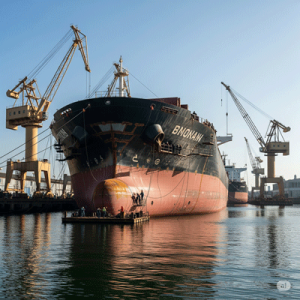
Imagine a bulk carrier collides with a floating object, denting its port side plating and slightly misaligning the propeller shaft. The vessel is safely escorted to port, experts survey the damage, and repair costs are estimated at USD 200,000. Because repairs are feasible and cost less than the vessel’s insured value, this is classified as a partial loss, and Pandi will cover the repair bill (minus deductible).
Primary Keywords: partial loss, repairable damage, hull insurance claim process
What Is Total Loss in Hull Insurance?
Definition:
A total loss arises when a vessel is either completely destroyed or repair costs exceed its insured value. Total loss can be further divided into:
-
Actual Total Loss (ATL): The ship is entirely lost, destroyed, or irretrievable.
-
Constructive Total Loss (CTL): Repairing the vessel would cost more than its insured worth, making it economically impractical.
Key Characteristics:
-
Complete Destruction (ATL): Examples include sinking in deep waters or complete break‑up in severe weather.
-
Economic Destruction (CTL): A vessel runs aground on a remote reef; while physically salvageable, the combined costs of salvage, towing, and repairs exceed its insured value.
-
Policy Coverage: Total loss claims trigger full insured value payouts, subject to policy limits and any applicable deductibles or salvage recoveries.
Example:
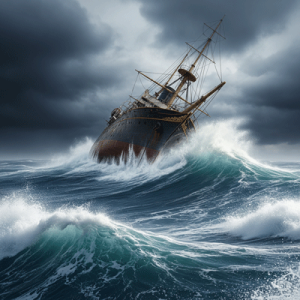
A chemical tanker encounters rogue waves in a severe storm and sinks in international waters. The vessel is irretrievable; Pandi pays out the full sum insured under your hull policy as an actual total loss. In contrast, a container ship runs aground on a distant shoal; salvage operations are technically possible, but combined costs of salvage, towage, and repairs would exceed USD 20 million, while the vessel’s insured value is USD 15 million. Declaring a constructive total loss, Pandi settles the claim at USD 15 million minus any recoverable salvage.
Primary Keywords: total loss marine insurance, actual total loss, constructive total loss, shipwreck
Key Differences Between Partial and Total Loss
| Aspect | Partial Loss | Total Loss |
|---|---|---|
| Definition | Repairable damage | Vessel destroyed or economically irreparable |
| Policy Payout | Repair costs up to insured amount | Full insured value (minus salvage recoveries) |
| Examples | Hull plating dent, machinery misalignment | Sinking (ATL), repair cost > insured value (CTL) |
| Deductible Impact | Applies to repair costs | Applies to full sum insured |
| Effect on Premiums | Moderate increase at renewal | Significant premium hike, or policy review |
How the Type of Loss Affects Claims and Payouts
-
Claims Process for Partial Loss
-
Survey & Assessment: Pandi’s appointed surveyor inspects damage.
-
Estimate & Approval: Repair estimate is submitted; coverage and deductibles are confirmed.
-
Repairs: Shipowner arranges for approved shipyard repairs.
-
Settlement: Pandi reimburses the repair costs (minus deductible).
-
-
Claims Process for Total Loss
-
Immediate Notification: Insured must notify Pandi promptly upon loss event.
-
Proof of Loss: Documentation of vessel’s condition, attempt to salvage, and cost estimates.
-
Declaration of Total Loss: After reviewing evidence, Pandi invokes ATL or CTL clause.
-
Payout & Salvage: Full insured value is paid; Pandi may attempt to recover salvage value or rights.
-
-
Required Documentation:
-
Partial Loss: Repair invoices, surveyor’s report, proof of payment.
-
Total Loss: Certificate of loss, salvage/deletion certificate, proof of value.
-
-
Impact on Future Premiums:
-
Partial Loss: Generally leads to a moderate increase in renewal premiums, reflecting risk exposure.
-
Total Loss: Can significantly raise rates or lead to policy non‑renewal, as underwriters reassess risk.
-
Contractual Implications and Policy Wording
Clear definitions in your hull policy are crucial. Ambiguous wording around “constructive total loss” or “abandonment” can delay settlements or trigger disputes. At Pandi, we ensure policyholders understand:
-
Abandonment Clause: Shipowner’s right to abandon the vessel to underwriters in CTL cases.
-
General Average: Shared liability for extraordinary sacrifices or expenditures.
-
Sue and Labor Clause: Obligation to minimize loss through reasonable measures.
When negotiating terms, confirm that your policy’s definitions align with international maritime conventions (e.g., York-Antwerp Rules), and that coverage limits reflect your vessel’s market value and trading area.
Final Thoughts
Understanding the distinction between partial and total loss under hull insurance is essential for effective risk management in the maritime industry. While partial losses focus on timely and cost‑effective repairs, total losses—whether actual or constructive—require strategic decisions around abandonment, salvage, and full-value compensation.
At arcticpandi, our experienced underwriters, surveyors, and claims adjusters are dedicated to guiding you through each step of the process. Whether you face a minor collision that needs quick repairs or a catastrophic incident that threatens total loss, Pandi is committed to delivering prompt, fair settlements and expert advice.